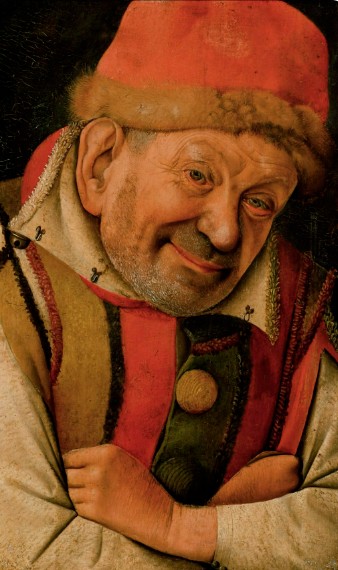
Jean Fouquet: The Painter Who Was Already Looking Toward the Renaissance.
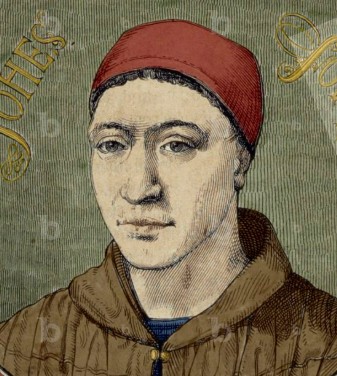
Jean Fouquet belongs to those artists whose lives seem to have been written in the shadows. Born in Tours around 1420 and probably dying between 1478 and 1481, he is now regarded as one of the great painters of the early French Renaissance. Yet remarkably little is known about his personal life. That uncertainty perhaps adds even more to his fascination.
Fouquet emerged at a remarkable moment in European art. France was still deeply rooted in the Gothic tradition, while Italy was developing new ways of representing space, light and the human figure. Fouquet would bring these worlds together.
His journey to Italy, particularly to Rome, became an important stage in his artistic development. Around 1445, he painted a portrait of Pope Eugene IV. When he returned to France, his work reflected what he had encountered abroad: a new understanding of perspective and volume combined with the precision, colour and refinement of French and Flemish traditions.
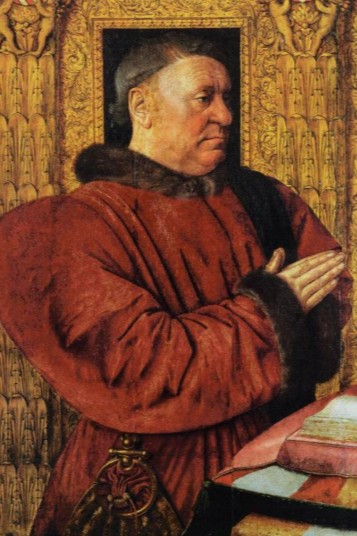
Among his most celebrated works is the Melun Diptych, commissioned by Étienne Chevalier, Treasurer of France, around 1452–1455. Originally kept in Melun, the two principal panels are now separated between Berlin and Antwerp. The magnificent original frame also contained a small self-portrait of Fouquet, now preserved at the Louvre.
But what makes Fouquet particularly intriguing is not simply the beauty of his paintings.
It is what they seem to suggest.
A face, an architectural detail, a colour or an apparently insignificant element can become an invitation to look again. Fouquet lived in a time when painting was not merely a way of representing the world. It could commemorate, persuade, narrate, communicate—and sometimes conceal.
It is precisely in this space between history and imagination that my work as a writer begins.
Looking at Jean Fouquet, his time, his travels and the mysteries that still surround some of his works, one question gradually emerged:
What if some of his paintings had preserved a message we had simply forgotten how to read?
That question became the starting point for my novel Jean Fouquet – The Heresy of Colors, a historical mystery in which art slowly becomes an investigation.
Henry de Toubeyre
Beacons: https://beacons.ai/henrydetoubeyre