Cultural Value: What Makes Art Worth Preserving and Worth Buying.
Before something becomes valuable, it becomes meaningful. That sequence is not accidental it is the quiet logic that has governed art markets for centuries, and the one that most investors still underestimate.
We live in an age that confuses price with value. Auction records make headlines. Social media turns artists into brands overnight. And yet the works that endure the ones that find their way into serious collections, into museum rooms, into the consciousness of a civilisation are rarely the ones that arrived loudest.
Cultural value is something different. It is the depth of meaning a work carries within its society the way it reflects beliefs, aspirations, conflicts and beauty that a particular moment in history needed to express. It is not assigned by a market. It is recognised by one.
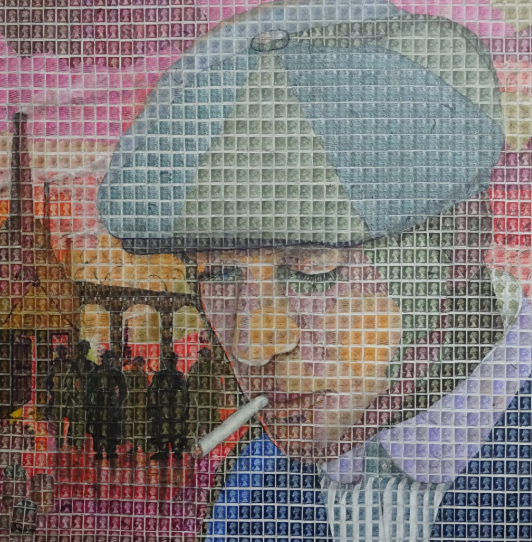
Peaky Blinder. Peter Mason.
The distinction matters enormously for the serious collector. Because cultural value and market value, while often aligned over the long term, operate on entirely different timescales.
Consider the trajectory of artists now considered canonical Modigliani, dismissed during his lifetime as too raw, too melancholic, too outside the conventions of his era. Or Caravaggio, whose revolutionary use of shadow was deemed vulgar by the academies of his time. Both were culturally significant before they were financially significant. The market simply caught up.
This pattern repeats with remarkable consistency. The works that cultures decide to preserve through institutions, through scholarship, through the quiet accumulation of critical attention tend, over decades, to become the works that markets decide to price accordingly.
The global art market returned to growth in 2025, with total sales rising 4% to an estimated $59.6 billion according to the Art Basel and UBS Report 2026. But the most instructive figure is not the headline total it is the composition of what sold. Works under $50,000 represented 61% of all lots sold at New York auctions, suggesting that serious collecting is no longer the preserve of the ultra-wealthy. The entry point into culturally significant art has widened considerably.
What this means for the informed collector is both simple and demanding: before asking what something is worth, ask what it means. Ask whether it carries within it something that a culture needs a question, a tension, a form of beauty that has not yet been fully articulated.
The collectors who built the great collections of the twentieth century were not primarily investors. They were readers of culture. They understood that the distance between artistic significance and market recognition is not a risk it is an opportunity.
In 2026, that opportunity remains very much open.
Art. Markets. Collections. The conversation continues for those who know where to find it.
HDT